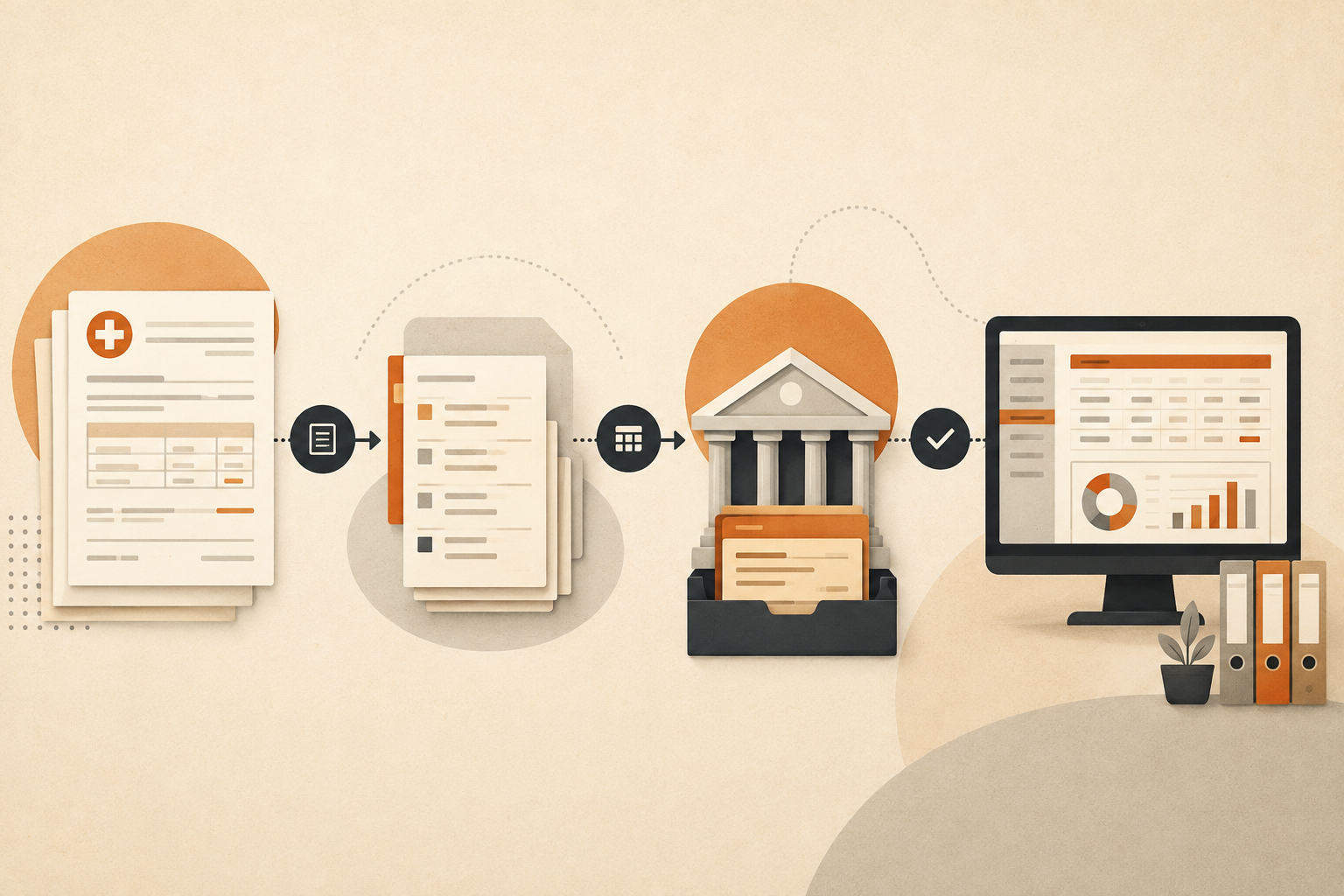
Medical Group Revenue Reconciliation: From Billing Reports to the Bank
Revenue reconciliation connects the operational story in your billing system with the deposits and balances recorded in your accounting system. When those sources are reviewed separately, leaders can see activity without knowing whether the financial picture is complete.
Start with the billing and practice-management reports
Define the reports that show charges, contractual adjustments, patient payments, payer payments, refunds and outstanding accounts receivable. The exact reports vary by platform, so document the source and reporting period used each month.
Match collections to bank activity
Compare reported payments with deposits received. Timing differences, deposit batching and merchant-processing fees can create legitimate differences, but they should be explained rather than left unresolved.
Connect deposits to the general ledger
Verify that deposits, fees, refunds and adjustments are recorded consistently in the accounting system. This creates a clear trail from operational reporting to the financial statements.
Review accounts receivable movement
Beginning A/R, new activity, payments, adjustments and ending A/R should form a coherent bridge. Large or unexplained movements deserve follow-up with the billing team.
Document exceptions and ownership
A useful reconciliation identifies the difference, its cause, the person responsible for follow-up and the expected resolution date. Repeated exceptions often reveal a workflow or system issue.
Revenue reconciliation does not replace medical billing. It provides financial oversight around the information produced by the billing process. The final scope should reflect the practice’s systems, available reports and division of responsibilities.